A connected perspective on DORA

From regulatory data
to operational resilience
intelligence.

Understand how your financial entities, contracts, ICT services,
providers and critical functions connect.

Watch the video
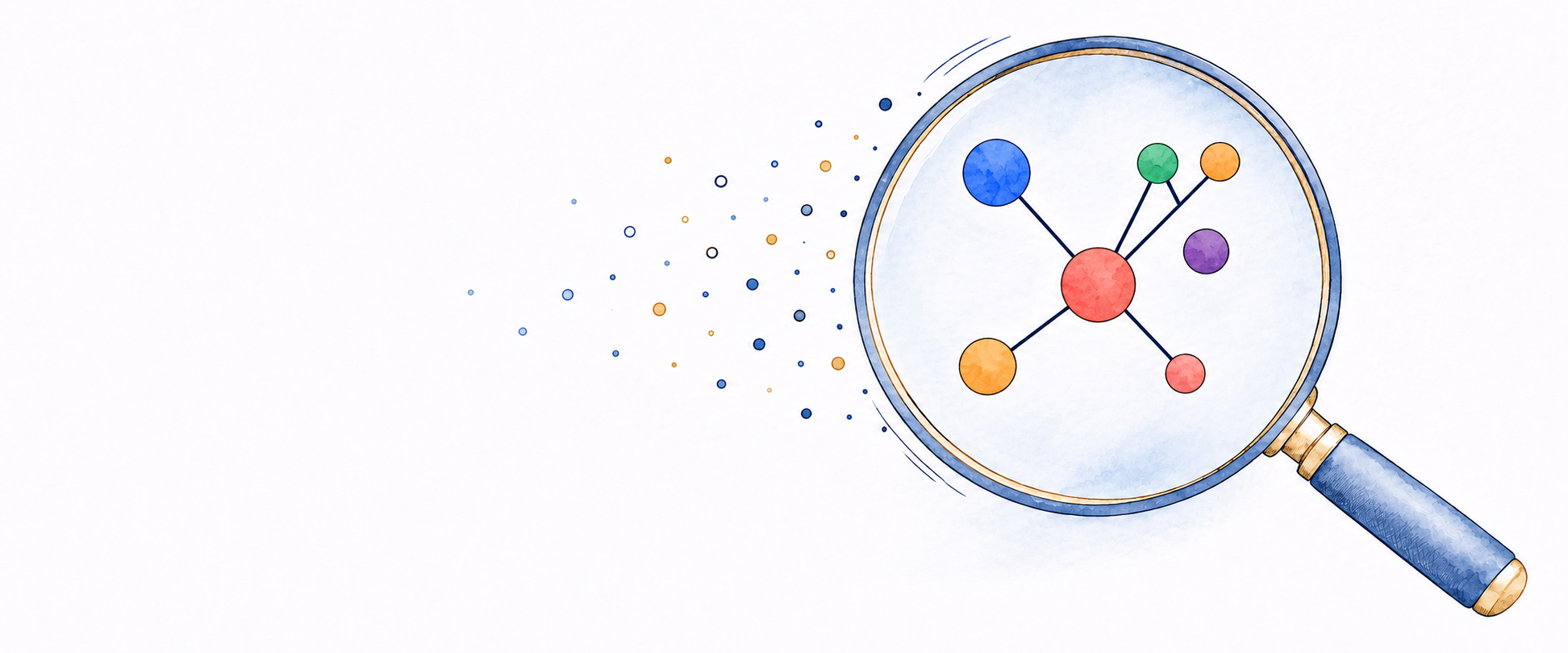
A drawn magnifying glass brings scattered information into focus as the colourful connected nodes of the DORA Manager logo.
Your information. A wider perspective.

Know. Validate.
Understand. Act.

Purpose built around DORA.
Connected to your organisation.

Explore the difference

A specialist approach

Built specifically for DORA.
Designed for understanding.

DORA is the foundation of the architecture, not simply a reporting output.

EU DORA Intelligence Manager is focused on DORA regulatory information and ICT dependencies. Its architecture is built around the Register of Information and the relationships it captures.

That structure underpins how information is maintained, validated, connected, analysed and prepared for reporting. A dedicated environment that complements your wider governance, risk and compliance arrangements.

One regulatory foundation.
A working source of intelligence.

01 / See the connections

Know your organisation.
Understand your dependencies.

EU DORA Intelligence Manager turns the information in your DORA Register of Information into a connected view of your organisation. Explore how financial entities, contracts, ICT services, providers and business functions relate to one another, within your group and across your external ICT supply chain.

Follow those connections to understand which services support your critical functions, where dependencies are concentrated and where potential exposures arise.

Your existing reporting data provides the foundation. Once your Register is imported, the relationship maps and operational resilience analytics use that same information, without requiring you to enter it again or create a separate dataset. The Scenario & Stress Test Lab also draws on relevant recorded information, alongside the scenario assumptions and assessments your team enters.

EU DORA Intelligence ManagerRELATIONSHIP MAP
Explore your organisation’s ICT dependencies
Recorded relationshipDerived service dependency
Full map overview

Organisation Financial Entities

Alpha GroupUltimate parent
Alpha Bank S.A.Subsidiary
Alpha Technology LtdSubsidiary

Organisation Branches

Alpha Bank S.A.Dublin branch
Alpha Bank S.A.Vienna branch

Contractual Arrangement

Internal outsourcing agreementOverarching · IG001
Master services agreementOverarching · MSA001
Cloud hosting agreementAssociated · CT001

ICT Provider

CloudTech Europe LtdRank 1
DataSecure NetworksOther provider

ICT Subcontractors

Infrastructure PartnerSupply chain · Rank 2
Data Centre PartnerSupply chain · Rank 3

Organisation Business Function

Online bankingAlpha Bank S.A.
Payments processingAlpha Bank S.A.
Customer authenticationOther service path

Assessment of ICT Providers

Assessment - CloudTech EuropeCT001 · Online banking
Assessment - CloudTech EuropeCT001 · Payments
01 / ORGANISATION

Start with the organisation.

Reveal the parent, subsidiaries and branches.

Illustrative records

Connect the entities. Trace the contracts. Understand the dependencies.

See the connections behind concentration

Different providers.
One ultimate parent.

Explore how providers within the same corporate group connect to ICT services, contractual arrangements and the functions your financial entities rely on.

EU DORA Intelligence ManagerICT ultimate parent concentration
Full map overview
ICT ultimate parentDataSecure Networks GmbH

ICT providers

CloudTech Europe LtdDirect ICT provider
CloudCorp Hosting Services IncDirect ICT provider

ICT services / arrangements

Cloud services: IaaS CT001Overarching arrangement
Cloud services: IaaS CT002Standalone arrangement
ICT Development ARR-2024-0001Subsequent or associated arrangement
ICT, facilities and hosting servicesExcluding cloud services · Associated arrangement

Functions supported across these relationships

Core Banking PlatformCritical / Important
Online BankingCritical / Important
Payment ProcessingCritical / Important

Financial entities in the connected view

Acme Bank SAFinancial entity
Alpha Bank S.A.Financial entity
Illustrative animation based on the platform view. Connections to functions and financial entities are grouped for clarity.

See beyond the individual provider.

A shared ultimate parent can reveal dependencies that are less apparent when providers are reviewed separately. EU DORA Intelligence Manager helps your teams explore those connections and investigate the supporting records.

02 / Investigate the exposure

A clearer view
of what needs
your attention.

Understand where your dependencies create exposure.

Explore concentration across ICT providers, parent undertakings and group entities. Examine supply chain dependencies, reliance of critical or important functions, and recorded recovery and exit readiness.

Bring contractual, data and geographic exposure into view. Investigate the records behind the analysis and identify areas that need further review.

Explore Operational Resilience Analytics
Resilience RiskExplore the evidence
8evidence areas
Provider concentration

Explore reliance on individual ICT providers and the services and functions connected to them.

Illustrative navigation. Equal segments identify areas and have no quantitative meaning.

Scenario & Stress Test Lab

Test disruption
before it happens.

Explore how a disruption could affect your organisation using information already recorded in your DORA Register of Information.

Select a scenario, define your assumptions and consider the potential impact on the ICT services, financial entities and business functions that depend on them. Bring relevant recorded relationships, contractual information and resilience evidence together in one assessment.

Move from understanding where your dependencies are to testing what happens when they are disrupted.

Explore Scenario & Stress Test Lab
Scenario & Stress Test Lab

Test how disruption scenarios could affect your organisation.

Scenario Type
Provider / ICT Service Outage
Information from your Register

Recorded information used for this assessment.

Scenario Result Completed

Results reflect the scenario assumptions and assessment.

Illustrative scenario assessment. No real customer data.

Contractual exposure

One agreement.
Connected information.

See how an overarching agreement connects to its associated arrangements, ICT services and the functions they support.

Understand the contract in its business context.

Bring the agreement, provider, services and supported function into one connected view. Review recorded expenditure alongside the agreement it relates to.

EU DORA Intelligence ManagerContractual relationships
MSA / Overarching agreementCT001
Recorded annual expense€600,000
Connected associated arrangement
Associated arrangementARR-2024-0001
ICT provider
CloudCorp Hosting Services IncDirect ICT provider
Provides services under the arrangement
ICT serviceICT Development
ICT serviceICT, facilities and hosting servicesExcluding cloud services
Supporting
Business functionCore Banking Platform
Performed by
Financial entityAcme Bank SA
Illustrative example. Expenditure is shown against the overarching agreement only.
✦LupaLynx AIIllustrative conversation
How can I explore our ICT dependencies?
✦
Start with the relationship you want to understand.

Explore the links between financial entities, contracts, ICT services and providers. Follow the recorded relationships into their supporting details.

QuestionContextEvidence
Explore the platform in the product video ↗

03 / Ask with purpose

Ask questions.
Understand the answer.
Explore the evidence.

Ask supported questions about your organisation’s ICT dependencies, concentration and recorded exposure in everyday language.

LupaLynx AI brings together relevant information within your authorised access. Follow the answer into supporting details, inspect the evidence and return to the source records.

When your question needs clarification, the assistant helps you make it more precise.

A clearer route from questions to understanding.

04 / Build on the information you have

One structured foundation.
More ways to put it to work.

Maintain the information. Understand the connections. Put it to use. From importing your existing Register to preparing your reporting exports, keep the work connected.

Register of Information

One structured foundation for connected intelligence.

Maintain the DORA Register across 15 EBA templates with regulatory field guidance, controlled values and related record context. Bring entities, contracts, ICT services and providers into a shared environment. The same information supports relationship mapping, validation and operational resilience analytics.

▤Register of InformationStructured. Related. Traceable.15 templates
Financial entitiesRelated records ↗
Contractual arrangementsRelated records ↗
ICT service providersRelated records ↗
Critical or important functionsRelated records ↗
Information with its context
05 / Coordinate the review

Bring the right people
into the review.

Give outstanding information a clear owner. Tasks and Information Requests connect each request to the relevant Register information, helping colleagues understand what needs attention and where their input is needed.

06 / Plan the next step

Keep important
contractual dates in view.

Contract Management helps your teams review key dates and set reminder windows, giving them time to consider renewals, changes and next steps.

See the platform in action

Follow the information.
Discover what it reveals.

Watch how EU DORA Intelligence Manager brings regulatory information to life through connected relationships, interactive maps and operational resilience analytics.

EU DORA Intelligence Manager • by LupaLynx

How to get started

Start with your information.
Discover the connections.

  1. Discuss your needs

    Tell us about your organisation, your existing Register and the questions your teams need to answer. We will help you identify a suitable starting point.

  2. Import and review

    Bring your existing Register into EU DORA Intelligence Manager. Review validation findings and identify information that needs correction or further investigation.

  3. Explore and understand

    With the relevant package, explore the recorded relationships between your entities, contracts, ICT providers and business functions. Follow findings into the supporting records.

See how your information connects.
Book a demonstration with Fatima and Charles.

Choose your starting point

From essential information
to connected intelligence.

A package for the way your team works. Speak with us about your organisation and request tailored pricing.

Essential

Register

Bring your Register information into one structured workspace.

  • All 15 Register templates
  • Import Centre
  • Validation Centre
  • Export Centre
Maintain. Validate. Prepare.
Comprehensive

Intelligence Plus

Turn understanding into coordinated action across your teams.

  • Everything in Advanced
  • Tasks and Information Requests
  • Contract Management
  • LupaLynx AI
Investigate. Coordinate. Act.
A separate paid service

Register Validation and Export

Import your existing information, explore validation findings and walk through the issues identified. Prepare an export for your selected reporting destination, with EBA format and naming conventions, Ireland’s CBI requirements or Austria’s FMA Excel template.

Available separately from
a platform subscription.

Free Register validation

Check your DORA Register.
Understand what needs attention.

Request a free validation review of your existing Register of Information with EU DORA Intelligence Manager.

Identify missing information, inconsistent entries and connections between records that need review. We will explain the findings, show you the affected records and discuss practical next steps.

What you can expect

  • A review of your Register against the agreed validation checks.
  • A walkthrough of the issues identified and why they matter.
  • Guidance on information that needs correction, clarification or further investigation.

How to get started

Tell us about your organisation and your existing Register. We will agree the scope of the review and discuss how your information will be handled before you share any files.

Need support with validation and export?

Our paid Register Validation and Export service provides additional support with reviewing findings and preparing an export for your selected supported reporting destination. Available separately from a platform subscription.

Please include only general information in your initial enquiry.

The people behind LupaLynx

Built on practical experience.
Shaped by feedback.

LupaLynx brings together legal, regulatory and financial services experience to help institutions connect their information and understand their operational dependencies.

Created by experts who helped to shape its development and who have made it work in practice

LupaLynx company logo

Fatima Nurkic

Founder and Regulatory Product Lead

Fatima is a lawyer and qualified solicitor in England and Wales, with experience across private practice, investment management, financial services, regulatory enforcement and complex investigations. She founded LupaLynx to help financial institutions connect regulatory information and better understand their organisational relationships and operational dependencies.

Legal, industry and regulatory experience

Fatima’s earlier legal experience includes working as an Upravni Pravnik for a company owned by the local authority in Mali Lošinj, on the Croatian island of Lošinj. She subsequently developed her career in London, working across private practice, investment management, regulatory enforcement and complex investigations, including roles in the Financial Conduct Authority’s Enforcement and Market Oversight division and at the Serious Fraud Office.

Across these roles, she has worked on commercial and technology contracts, corporate governance, regulatory compliance, investigations and the review of complex evidence. Her experience also includes supporting the establishment of fund and corporate structures across jurisdictions.

She has practical experience supporting the implementation of the DORA Register of Information and related contractual work, including organising and reviewing information about financial entities, ICT providers, services and contractual arrangements.

Having worked with contracts, regulatory requirements and complex evidence, Fatima understands the challenges teams face when information is spread across documents, systems and departments. This experience shapes her approach to helping Legal, Compliance, Risk, Vendor Management and other teams across the organisation build a shared understanding of their business, trace connections between entities, contracts and ICT services, and identify matters requiring further review.

Legal education and professional qualifications

Fatima obtained her first legal qualification at the University of Tuzla in Bosnia and Herzegovina in 2015, earning the title Pravnik. Her qualification was subsequently recognised in Croatia as Upravni Pravnik.

She continued her legal education at The University of Law in London, where she completed postgraduate studies in English law and earned a Master of Laws in Professional Legal Practice with Distinction.

Her training as a lawyer spans both civil law and common law systems. Her postgraduate studies included Banking and Debt Finance, Commercial Dispute Resolution, Competition Law and Intellectual Property. Her master’s research examined the transition from LIBOR to SONIA.

The experience behind EU DORA Intelligence Manager

Working with complex evidence and interconnected information in regulatory investigations, together with practical DORA implementation experience, inspired Fatima to develop EU DORA Intelligence Manager and its underlying regulatory data architecture.

She leads the platform’s regulatory architecture and product development, connecting information about organisational structures, contracts, ICT services, providers and business functions. Her focus is on helping firms explore those relationships, trace supporting evidence and understand potential exposures, making regulatory information useful for both reporting and everyday work.

Charles Forde

Co-Founder and Chief Client Officer, Regulatory Intelligence

Charles has more than 30 years of experience in technology, operational risk and resilience in international financial services. As Co-Founder and Chief Client Officer, he leads LupaLynx’s commercial strategy and partnerships and works alongside Fatima Nurkic to shape EU DORA Intelligence Manager for the teams responsible for operational resilience.

Banking and regulatory experience

Charles began his career as an information technology engineer with the United Nations, supporting military peacekeeping missions, international development organisations and financial institutions. He went on to lead operational resilience, risk and regulatory programmes in international banking.

At Allied Irish Banks, Charles served as Group Head of Operational Risk and held regulated responsibilities under the Central Bank of Ireland’s CF-2 framework. At UBS, he was a Material Risk Taker in the UK and held group-wide leadership responsibilities for operational resilience, third-party compliance and operational risk.

Based in Frankfurt, Charles held the roles of Chief Operating Officer and Head of Operational Risk for Nomura in Europe and Switzerland. He also served as EU Outsourcing Officer for Banque Nomura France. At EY, he led regulatory remediation programmes for major European financial institutions. These roles gave him experience on both sides of regulatory implementation, as a bank executive responsible for operations and risk and as an adviser helping institutions address regulatory findings.

Board and regulatory engagement

Charles represented UBS in the Bank of England’s Cross Market Operational Resilience Group from its early development in 2015. He has engaged directly with boards and regulators on operational resilience, outsourcing and third-party risk. His experience spans the questions boards ask about a firm’s exposure and the detail operational teams need to explain which services, providers and business functions are involved.

Education

Charles holds a Bachelor of Engineering in Electrical, Electronics and Communications Engineering from The City University of New York.

Role at LupaLynx

Charles and Fatima bring complementary experience to the platform. Fatima contributes a background in legal practice, regulatory enforcement and DORA implementation. Charles brings more than 30 years of experience in technology, operational risk and resilience, alongside senior leadership and direct engagement with boards and regulators in international financial services.

One question they consider together is what a firm needs to know when an ICT provider reports a disruption. An operational team may need to trace which services are affected and which business functions rely on them. A board may ask whether several entities across the group depend on that same provider. Charles draws on his work with boards, regulators and operational teams to identify the questions that matter in each setting. Together, he and Fatima shape how the platform helps people answer those questions and trace the answers back to the underlying records.
DORA Insights

Practical guidance for
connected information.

Clear articles for teams working with the DORA Register of Information, ICT third party arrangements and operational resilience.

Guidance article DORA Register of Information

How to Prepare a DORA Register of Information

The Register is more than a reporting exercise. Explore how entities, contractual arrangements, ICT services, providers and critical or important functions can be connected to create a stronger foundation for reporting and operational resilience.

Read the article

Guidance article Register validation

DORA Register Validation: What Should Firms Check Before Reporting?

Review completeness, identifiers and the relationships between records. Understand how technical checks and information quality review help teams prepare their Register for reporting.

Read the validation article

Guidance article ICT third party risk

DORA ICT Third Party Risk: Understanding Contracts, Providers and Subcontractors

Explore the connections between contractual arrangements, group entities, ICT providers and subcontractors, and how they help reveal operational dependencies.

Read the third party risk article

Guidance article Critical or important functions

Critical or Important Functions Under DORA: Understanding ICT Dependencies

Trace the ICT services, contractual arrangements and providers supporting critical or important functions, and investigate shared dependencies.

Read the functions article

Guidance article Concentration risk

DORA Concentration Risk: Understanding Shared ICT Dependencies

Explore shared providers, corporate group connections and supply chain dependencies to understand where disruption could affect several parts of your organisation.

Read the concentration risk article

Guidance article Reporting and exports

DORA Register Reporting: Preparing Exports for the EBA Framework, Ireland and Austria

Understand how the EBA reporting framework relates to national submission requirements, including the published Ireland and Austria requirements for the 2026 reporting cycle.

Read the reporting article

Guidance article Scope and proportionality

Who Must Comply With DORA? Understanding Scope, Exemptions and Proportionality

Understand which entities fall within DORA, how exclusions and simplified requirements differ, and what this means for maintaining a Register of Information.

Read the scope article

Platform perspective Regulatory modules

Different Regulations. Connected Information.

Explore how dedicated regulatory modules could preserve the requirements of each regime while helping organisations reuse verified information and trace their assessments.

Read the regulatory modules article

New guidance will be added as the DORA Insights library grows.

Register informationICT relationshipsOperational resilience

Frequently asked questions

Your questions.
Clear answers.

Explore the platform, your organisation’s relationships and the practical steps for getting started.

Getting started

What is EU DORA Intelligence Manager?

EU DORA Intelligence Manager brings together your organisation’s DORA Register information in one structured workspace. It supports import, maintenance, validation and export preparation, alongside interactive relationship mapping, operational resilience analytics and LupaLynx AI.

The platform helps teams understand how entities, contracts, ICT services, providers and business functions connect.

Can we import our existing Register of Information?

Yes. The Import Centre supports bringing existing Register information into the platform. We can discuss your current file structure, the supported import format and any preparation needed.

You can build on information your organisation has already collected.

Do we need to enter additional data to use the relationship maps and operational resilience analytics?

The relationship maps and operational resilience analytics use the information in your imported DORA Register of Information. You can explore the connections between financial entities, contracts, ICT services, providers and business functions using the same data you maintain for reporting, without entering it again or creating a separate dataset.

The insights reflect the information recorded in your register. The Validation Centre helps identify missing, inconsistent or unresolved information for your team to review.

How long does it take to import our existing Register?

Timing depends on the file size, structure and preparation required. A Register already organised in a supported format will generally need less preparation than information spread across several spreadsheets.

We can review your file structure and provide an estimated timeframe. Once imported, your team can review validation findings and explore the recorded relationships.

Do we need to replace our existing systems?

We can discuss how EU DORA Intelligence Manager would fit into your existing processes, including information maintained elsewhere and how it could be imported.

Any requirements for direct connections with other systems would be assessed separately.

Can we see the platform before deciding?

Yes. Request a demonstration to explore the platform and discuss how its features could support your organisation’s Register, contractual relationships and ICT dependencies.

Understanding your organisation

What information does the Scenario & Stress Test Lab use?

The Lab uses relevant information recorded in your DORA Register of Information, together with assumptions and assessments entered for the scenario. Available information depends on what has been recorded and the scenario being assessed.

What kinds of disruption can we explore?

Explore provider or ICT service outages, geographic disruption, provider insolvency or stressed exit, cyberattack or data compromise, and unexpected termination or accelerated exit.

Does using the Lab satisfy all DORA testing requirements?

The Lab supports structured scenario analysis and resilience testing. Organisations remain responsible for determining and meeting their applicable testing requirements.

What makes EU DORA Intelligence Manager different?

EU DORA Intelligence Manager gives Legal, Compliance, Vendor Management, Risk and other teams a connected view of their organisation and its ICT arrangements.

The interactive relationship map helps users explore fundamental questions: Who is the ultimate parent undertaking? Which entities are subsidiaries? Where do branches sit? Which group entities provide or receive ICT services, and how do those arrangements connect to external providers?

Teams can explore the financial entities within their recorded EU DORA reporting scope and follow relationships through group entities, contracts, ICT services, providers, subcontractors, business functions and service assessments.

Our approach combines a specific focus on DORA’s regulatory data structure with interactive mapping, validation, operational resilience analytics and LupaLynx AI. Information held in separate Register tables becomes a navigable view that teams can investigate and trace back to supporting records.

Who within our organisation can benefit from the platform?

Legal, Compliance, Vendor Management, Risk, IT and operational resilience teams can use the information for different purposes.

Legal teams can explore agreements and counterparties. Compliance teams can review reporting information. Vendor Management and Risk teams can investigate provider relationships, shared services and recorded exposure. IT and operational resilience teams can examine service dependencies and the functions they support.

These teams can work from the same underlying information while approaching it with different questions.

Is the platform only for regulatory reporting?

The platform also helps teams understand their organisation’s contractual and ICT relationships throughout the year.

Interactive views and analytics support investigating dependencies, examining shared providers and reviewing the information behind potential exposures. Reporting is one use of the connected information.

Can we see our group structure, including parent undertakings, subsidiaries and branches?

Yes. The interactive map helps users explore recorded organisational relationships, including parent undertakings, subsidiaries and branches.

Teams can examine how entities within their EU DORA reporting scope connect to the wider group and its ICT arrangements. These views support reviewing the recorded scope and relationships.

Can we trace a service provided through another group company?

Yes. Where the relevant relationships are recorded, you can follow a service from the financial entity receiving it through the group company providing it and the associated contractual arrangements to an external ICT provider.

This helps teams understand both the internal arrangement and the external dependency behind it.

Can we understand how our contracts relate to one another?

Yes. The platform supports exploring connections between overarching agreements, such as master services agreements, and subsequent arrangements, such as statements of work.

It also helps teams examine links between internal group arrangements and relevant external contracts, providing context for how services are delivered.

Can we see which business functions depend on a provider?

Yes. Where the relevant relationships are recorded, teams can trace connections between providers, ICT services, contractual arrangements and the business functions they support.

This helps users investigate which parts of the organisation rely on a particular service or provider.

Can we identify dependencies shared across several entities or functions?

Yes. Operational resilience analytics help teams investigate recorded dependencies on common providers, provider groups and supply chains.

You can explore which entities, services and functions are connected and examine the supporting information to understand the significance of those relationships.

Can we explore assessments alongside the services they concern?

Yes. Recorded service assessments can be considered alongside the relevant contractual arrangements, providers and functions.

This helps teams investigate information such as provider substitutability, exit planning and the identification of alternatives in the context of the service being assessed.

Can we explore where our data is stored and processed?

Yes. The platform helps teams explore recorded storage and processing locations alongside the relevant ICT arrangements.

This supports investigating geographical dependencies and identifying information that may need further review.

AI, evidence and ongoing work

How does LupaLynx AI help?

Ask supported questions about your organisation’s ICT dependencies, concentration and recorded exposure in everyday language.

LupaLynx AI brings together relevant information within your authorised access. Follow the answer into supporting details, inspect the evidence and return to the source records.

When your question needs clarification, the assistant helps you make it more precise.

Can we investigate the information behind an answer or finding?

Yes. The platform helps teams move from summaries, analytics and relationship views into supporting details and the relevant Register records.

This allows users to examine the recorded information behind an answer or finding and identify where further investigation is needed.

What happens if our information is incomplete or a relationship is missing?

Validation findings help identify missing information, inconsistent entries and relationships that need review.

The platform’s views depend on the information recorded. Your team can investigate the affected records, clarify missing relationships and improve the information used for analysis and reporting.

Can the platform help us request information from colleagues?

Yes. Tasks and Information Requests support coordinating follow up with the people responsible for providing or reviewing information.

Your team can use validation findings and the affected records to explain what needs clarification and keep the work connected to the relevant information.

Can we use the platform between reporting cycles?

Yes. EU DORA Intelligence Manager supports ongoing Register maintenance, validation and exploration of organisational, contractual and ICT relationships.

As your team updates the underlying records, those records provide the basis for reviewing dependencies and preparing future reporting outputs.

Validation and export

Can we request validation without purchasing a subscription?

Yes. You can request a free validation review of your existing Register.

We will agree the scope and information sharing arrangements before you provide files. The review helps you understand the issues identified, the affected records and practical next steps.

How does the platform help us prepare our Register for submission?

EU DORA Intelligence Manager helps your team review the information behind the export. The Validation Centre identifies missing information, inconsistent entries and relationships that need attention, helping you locate the affected records and address the findings.

The Export Centre then prepares your recorded information in the supported format for your selected reporting destination, including the relevant package structure and naming conventions.

This supports a clear process: review your information, address validation findings and prepare the reporting files. Your organisation submits those files through the relevant authority’s channel, where they undergo the authority’s own checks.

What is the difference between an Excel export and a reporting package?

An Excel export allows your team to review and share Register information in a familiar spreadsheet format.

A reporting package organises the information into the technical files required for a particular submission. Depending on the supported destination, this may involve several files packaged together in a ZIP archive.

Some destinations use a prescribed Excel template for submission. We can explain which output is appropriate for your selected reporting destination.

Does exporting submit our Register to the regulator?

Exporting prepares the files for your organisation to review.

Your organisation then submits them through the relevant authority’s reporting channel and reviews any feedback received.

Can we purchase validation and export support separately?

Yes. Our paid Register Validation and Export service is available without a platform subscription.

The service provides support with reviewing validation findings and preparing an export for your selected supported reporting destination. We will discuss your existing Register and the assistance your team needs.

Packages and information sharing

Which package should we choose?

Essential supports Register maintenance, import, validation and export preparation.

Advanced adds the Dashboard, Interactive Relationship Map and Operational Resilience Analytics.

We can discuss your team’s needs, explain the available packages and help you decide whether a platform subscription or the standalone Validation and Export service is more appropriate.

How will our information be handled during a validation review?

Before you share files, we will discuss the review scope and the arrangements for handling your information.

Please include only general information in your initial enquiry. We will discuss how to share your Register with you directly.

Have another question? Speak with Fatima and Charles.

Let’s start a conversation

What could your information
tell you?

Speak with Fatima and Charles about your organisation’s needs and how LupaLynx could help you better understand your ICT relationships and operational dependencies.

info@lupalynx.com
Speak with LupaLynx

Let’s talk.

Tell us a little about your organisation. We will take it from there.

This opens a draft in your email application addressed to info@lupalynx.com. Please leave sensitive Register information out of your initial enquiry.

Privacy and enquiries

You choose what to share.

This website does not store the details entered in the enquiry form. The form prepares a message in your own email application, which you can review before sending.

You can also contact LUPALYNX TECHNOLOGY LIMITED directly at info@lupalynx.com to discuss how information for a validation review will be handled before sharing it.

Registered office: Venture Hub, 136 Capel Street, Dublin, D01 T2C9, Ireland.